Showing posts with label Writing. Show all posts

Monday, 10 January 2011

Hiragana: Lesson 40 - ‘り’ [ri]

Posted Image

Pronunciation:
‘り’ is romanized ‘ri’.

Words with ‘り’:
‘り’ at the beginning:

  • 利子/りし (rishi -> interest (bank))
  • 林檎/りんご (ringo -> (uk) apple; apple tree; malus pumila)
  • 理科/りか (rika -> science)
  • 力士/りきし (rikishi -> sumo wrestler; rikishi; strong man)
  • 率/りつ (ritsu -> rate; ratio; proportion; percentage)
  • 陸生/りくせい (rikusei -> rerrestrial)

Hiragana: Lesson 39 - ‘ら’ [ra]

Posted ImageWe finished with 'ya' group! \o/ So now, let's move one to the next group, which is the 'ra' group!


Pronunciation:
‘ら’ is romanized ‘ra’.

Words with ‘ら’:
‘ら’ at the beginning:

  • 来週/らいしゅう (raishuu -> next week)
  • 来店/らいてん (raiten -> coming to the store)
  • 楽園/らくえん (rakuen -> pleasure garden; paradise)

Sunday, 9 January 2011

Hiragana: Lesson 36 - ‘や’ [ya]

Posted Image

Remember this character? We introduced it too early back then in Hiragana Lesson 7: ‘き’ [ki]. It was when we were talking how some characters may be combined with yo-on. This is the original character. Y section has only up to 3 characters (a, u, o) compared to other groups who have 5 type of characters that ends in: a, i, u, e, o.

Saturday, 8 January 2011

Hiragana: Lesson 34 - ‘め’ [me]

Posted Image

Pronunciation:
‘め’ is romanized ‘me’ and prononced ‘me’ as in ‘met’.

Words with ‘め’:
‘め’ at the beginning:

  • めがね (megane -> glassess)
  • 回る / めぐる (meguru -> spin; rotate; round)
  • 迷惑 / めいわく (meiwaku -> nuisance; trouble; annoyance)
  • 目 / め (me -> eye)
  • 目指す / めざす (mezasu -> aim)


‘め’ in the middle:
  • 運命 / うんめい (unmei -> fate; destiny)

Hiragana: Lesson 33 - ‘む’ [mu]

Posted Image
Pronunciation:
‘む’ is romanized ‘mu’ and prononced ‘moo’ as in ‘moon’.

Words with ‘む’:
‘む’ at the beginning:

  • 胸 / むね (mune -> chest)
  • 娘 / むすめ (musume -> daughter)
  • 紫色 / むらさきいろ (murasaki iro - purple)
  • 難しい / むずかしい (muzukashii - difficult)
  • 結ぶ / むすぶ (musubu -> to tie; bind)

‘む’ in the middle:

  • 寒い / さむい -> (samui -> cold (weather))
  • 眠い / ねむい (nemui -> sleepy)

Hiragana: Lesson 32 - ‘み’ [mi]

Posted Image


Pronunciation:
‘み’ is romanized ‘mi’.

Words with ‘み’:
‘み’ at the beginning:

  • 水 / みず (mizu -> water)
  • 見る / みる (miru -> look; see)
  • みかん (mikan -> orange)

Friday, 7 January 2011

Hiragana: Lesson 30 - ‘ほ’ [ho], ‘ぼ’ [bo] & ‘ぽ’ [po]

Posted Image

Pronunciation:
‘ほ’ is romanized (pronounced) ‘ho’ as in 'hop'.

Words with ‘ほ’:
‘ほ’ at the beginning:

  • 星 / ほし (hoshi -> star)
  • 微笑む / ほほえむ (hohoemu -> smile)
  • 本/ ほん (hon -> hon)

Hiragana: Lesson 29 - ‘へ’ [he], ‘べ’ [be] & ‘ぺ’ [pe]

Posted Image

Pronunciation:
‘へ’ is romanized (pronounced) ‘he’ as in 'hen'. But it can al

Words with ‘へ’:
‘へ’ at the beginning:
  • 蛇 / へび (hebi -> snake)
  • 部屋 / へや(heya -> room)
  • 変な / へんな (hen na -> weird; strange)
  • 平和 / へいわ (heiwa -> peacefulness)

Hiragana: Lesson 28 - ‘ふ’ [fu], ‘ぶ’ [bu] & ‘ぷ’ [pu]

Posted Image
ふ, in hiragana, or フ in katakana, is one of the Japanese kana, each of which represents one mora. The hiragana is made in four strokes, while the katakana in one. It represents the phoneme /hu͍/, although for phonological reasons, the actual pronunciation is 'fu'

Hiragana: Lesson 27 - ‘ひ’ [hi], ‘び’ [bi] & ‘ぴ’ [pi]

Posted ImagePronunciation:
‘ひ’ is romanized ‘hi’.

Words with ‘ひ’:
‘ひ’ at the beginning:

  • 日 / ひ (hi -> day, sunshine)
  • 火 / ひ (hi -> fire)
  • 非 / ひ (hi -> fault)

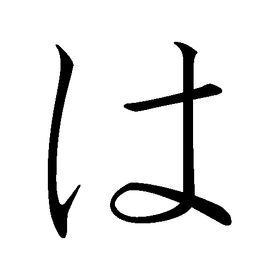
Hiragana: Lesson 26 - ‘は’ [ha], ば [ba] & ‘ぱ’ [pa]

________________________

CHARACTERS OF THE DAY!


Hakuba: Konnichiwa, minna-sama! Kyou hiragana no HA wo benkyoshitai! Tna-san to Kaoko-san kochira e ikanai, ja boku wa koko ni iru. Ah- wasurechatta, boku wa Hakuba Saguru, yoroshiku onegaishimasu!

Posted Image

*Cough*

Someone came to the class and coughed. Crossing her hands lazily.

Thursday, 6 January 2011

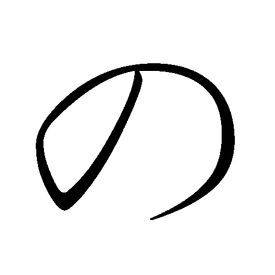
Hiragana: Lesson 25 - ‘の’ [no]


______________________

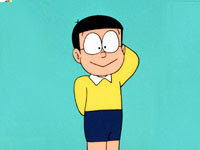
Today’s character is NOBITA!

Kaoko: Let's introduce our guest on today's lesson, here is NOBITA NOBI

Nobita: Ah, uh, こんにちは (Hello)!I'm Nobita Nobi (のび太野比), yoroshiku onegaishimasu (nice to meet you) !

Posted Image

Tna: Ara? Nobita-kun ka? Why are you here? Posted Image

Nobita: Doraemon told me to go here. I don't know what's going on actually, but he said Shizuka-chan is here! Where's she? Where's she?

Tna: Shizuka-chan? Posted Image

Hiragana: Lesson 24 - ‘ね’ [ne]


Pronunciation:
‘ね’ is romanized 'ne'. And pronounced like ‘ney’ and/or ‘neighbor’.

Words with ‘ね’:
’’ね’ at the beginning:

  • 眠る / ねむる (nemuru -> sleep)
  • 眠い / ねむい (nemui -> sleepy)
  • 猫 / ねこ (neko -> cat)
  • 熱 / ねつ (netsu -> fever) 
  • ねぎ (negi -> green onion)
  • ねずみ (nezumi -> mouse)
  • 妬ましい / ねたましい (netamashii -> jealous; envious)
  • 値段 / ねだん (nedan -> price)
  • 願う / ねがう (negau -> hope; wish; desire; request)
  • 年 / ねん (nen -> year)

‘ね’ in the middle:

  • 微熱 / びねつ (binetsu -> slight fever)

Hiragana: Lesson 23 - ‘ぬ’ [nu]

Posted Image

Pronunciation:
‘ぬ’ is romanized 'nu' and pronounced ‘noo’ as in ‘noon’ .

Words with ‘ぬ’:
Word beginning with ‘ぬ’:

  • 盗む / ぬすむ (nusumu -> to steal; rob; thieve)
  • 温もり / ぬくもり (nukumori -> warmth; ardor; passion) 
  • 脱ぐ / ぬぐ (nugu -> to take off (clothing, shoes, etc))
  • 抜け出る / ぬけでる (nukederu -> to steal out)
  • 縫う / ぬう (nuu -> sew)
  • 縫い針 / ぬいばり (nuibari -> needle; sewing needle)
  • 抜け道 / ぬけみち (nukemichi -> loophole)


’ぬ’in the middle:
  • 息抜き / いきぬき (ikinuki -> relaxation; taking a breather)
  • 買主 / かいぬし (kainushi -> buyer; purchaser)
  • 生え抜き / はえぬき (haenuki -> a career)
  • 地主 / じぬし ( jinushi -> landlord; agrarian)
  • 株主 / かぶぬし (kabunushi ->

Hiragana: Lesson 22 - 'に' [ni]

Posted Image
に, in hiragana, or ニ in katakana, is one of the Japanese kana, which each represent one mora. The hiragana is written in three strokes, while the katakana in two.

Pronunciation:
'に' is romanized 'ni' and pronounced ‘ni’ as in ‘nick’.

Words with 'に':
Word beginning with 'に':

  • 日本語/にほんご (nihongo -> Japanese Language)
  • 苦い/にがい (nigai -> bitter)
  • 肉/にく (niku -> meat)
  • 逃げる/にげる (nigeru -> to run away; to escape)

Hiragana: Lesson 21 - 'な' [na]


Posted Image
Kaoko: Hello once again, everyone! I hope you are all are in the best of healths and are in high spirits for today’s lesson. Uh... we have a guest fr today’s lesson... well, you know... she is quite, ehem... famous... her head... is, wanted... for over... 16,000,000... umm...


Nami: ...I didn’t come here to be targetted... where’s the money?
Kaoko: Ehh! But we haven’t started yet! And you didn’t do anything!
Nami: Sheesh... so, what would you like me to do *rude tone*?
Kaoko: It was a mistake I chose you for today... Posted Image
Nami: Seriously, why did you call a pirate over to be a help guy to some ridiculous lesson?
Kaoko: ...Meanie! You can go home now for all I care. I won’t give you anything because you didn’t help.
Nami: Eeehhh! After all the way. ごめん, ごめん! ほんとうに ごめなさい (sorry, sorry! I am really sorry)! What would you like me to do, Kaoko-oneesama~

Wednesday, 5 January 2011

Hiragana: Lesson 20 - 'と' [to] & 'ど' [do]


Posted Image

Kaoko: Konnichiwa, minna! How are you doing today? I hope you are all in your high spirits and ready for the course.

Today's lesson is the for the final T Section's character, 'と'! と, in hiragana, or ト in katakana, is one of the Japanese kana, each of which represents one mora. Both represent the sound [to], and when written with dakuten represent the sound [do]. Ah, I forgot! We also have a guest today... Our character for today’s lesson is...!!

Hiragana: Lesson 19 - 'て' [te] & 'で' [de]

Posted Image


Kaoko: Hehe, I thought I would do some entertaining once in awhile, so I invited a guest to join us for today’s lesson. And of course, she also has a connection to our today’s subject. And her name is... TENTEN!

Tenten: Hi. How are you guys doing? You see, I have two ‘te’s in my name... that’s why Kaoko invited me for today’s lesson. よろしく お願いします ね~

Kaoko: Plus! She will be our guide.
Tenten: Hai! 頑張るよ! So, mmm.. you are dealing with the character ‘te’, right?
Kaoko: Yes. Mind explaining it to us?
Tenten: Sure. て, in hiragana, or テ in katakana, is one of the Japanese kana, each of which represents one mora. Both represent [te]. How its written and how it is pronounced is really easy to remember. We’ll cover it in a moment.
As we are here, you may also want to hear some of my name’s trivia. Tenten, "Ten", in Japanese means heaven or heavenly. So in this case, it means "heavenly, heaven". "Tenten" can also mean, "little by little" in Japanese, "this and that", "here and there", or "dot". It is also a possibility that my name insinuates "Ten out of Ten," a reference to my skill in hitting targets-
Kaoko: You are going off-topic.

Hiragana: Lesson 18 - 'つ' [tsu] & 'づ' [dzu; zu]


Posted Image

つ, in hiragana, or ツ in katakana, and the variant form ㋡, is one of the Japanese kana, each of which represents one mora. Both are phonemically /tu͍/ although for phonological reasons, the actual pronunciation is ‘tsu’. In the Ainu language, where the sound /tu͍/ does exist, it is often written as ツ゚ or ト゚.

Hiragana: Lesson 17 - 'ち' [chi] & 'ぢ' [ji]

Posted Image

ち, in hiragana, or チ in katakana, is one of the Japanese kana, which each represent one mora. Both are phonemically /ti/ although for phonological reasons, the actual pronunciation is ‘chi’.